16 Narrow Garden Ideas to Transform Your Long, Thin Space

If you have a long, narrow garden, you’re in good company. These are some of the most common garden layouts, especially in urban and suburban areas. The challenge? They can feel like corridors rather than inviting outdoor retreats.
But here’s the good news: with the right approach, I can help you transform that skinny strip of land into a beautiful, functional space you’ll actually want to spend time in.
In this guide, I’ll share 16 practical narrow garden ideas that will help you make the most of your long garden, from clever layout tricks to the perfect plant choices.
1. Create Distinct Zones Instead of One Long Path

The biggest mistake I see in narrow gardens is installing a single path that runs straight down the middle. This emphasizes the length and makes the space feel even more corridor-like.
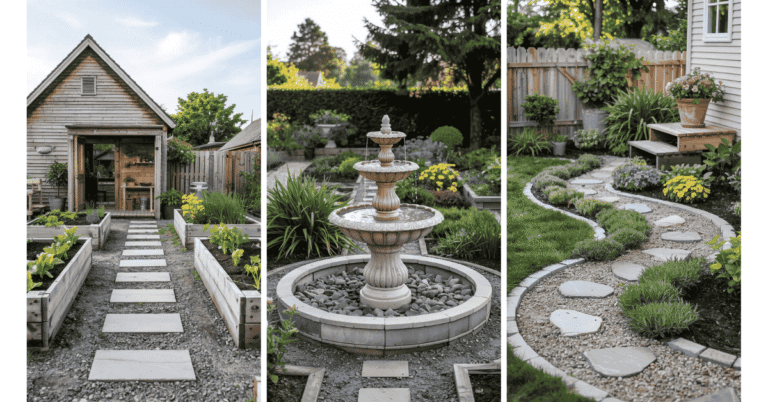
Instead, I recommend dividing your garden into separate zones or “rooms.” Think of one area for morning coffee, another for dining, and perhaps a quiet reading nook at the far end. By creating these distinct spaces, you shift focus away from the garden’s shape and toward the lovely areas you’ve created.
You don’t need solid barriers between zones. The key is to imply separation while maintaining sightlines through the space.
2. Avoid a Lawn That Runs the Entire Length
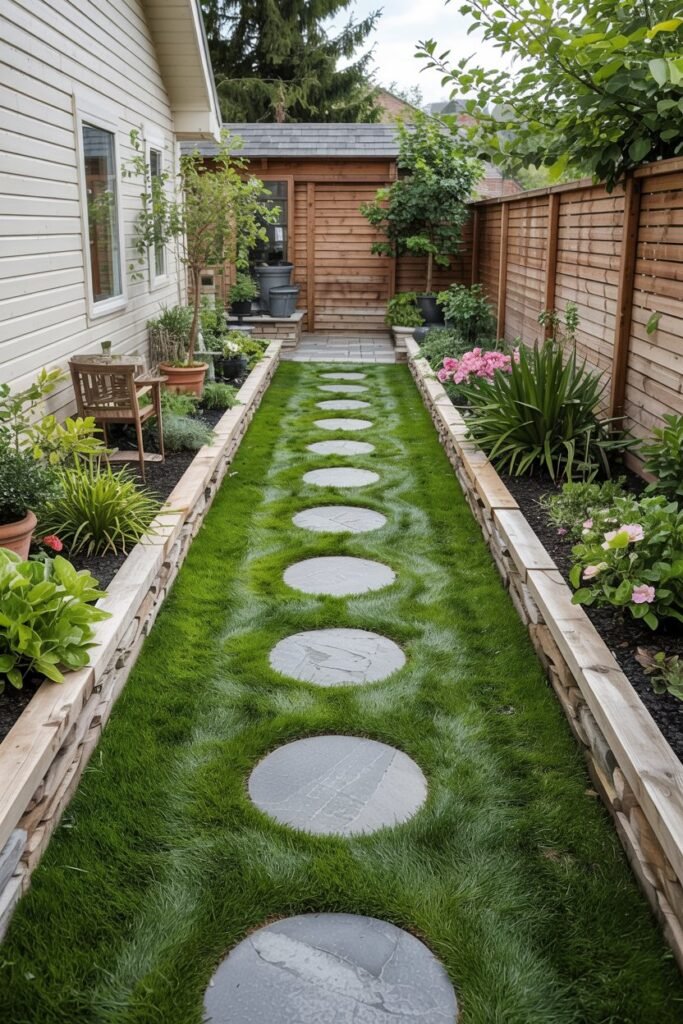
Laying a lawn all the way down your garden with planting beds along the edges is another common pitfall. This layout emphasizes the narrowness and makes the space feel even longer.
I suggest breaking up the lawn into strong geometric shapes—circles, squares, or rectangles—within each zone. This approach creates visual interest and makes your garden feel wider and more dynamic.
3. Give Each Zone a Clear Purpose
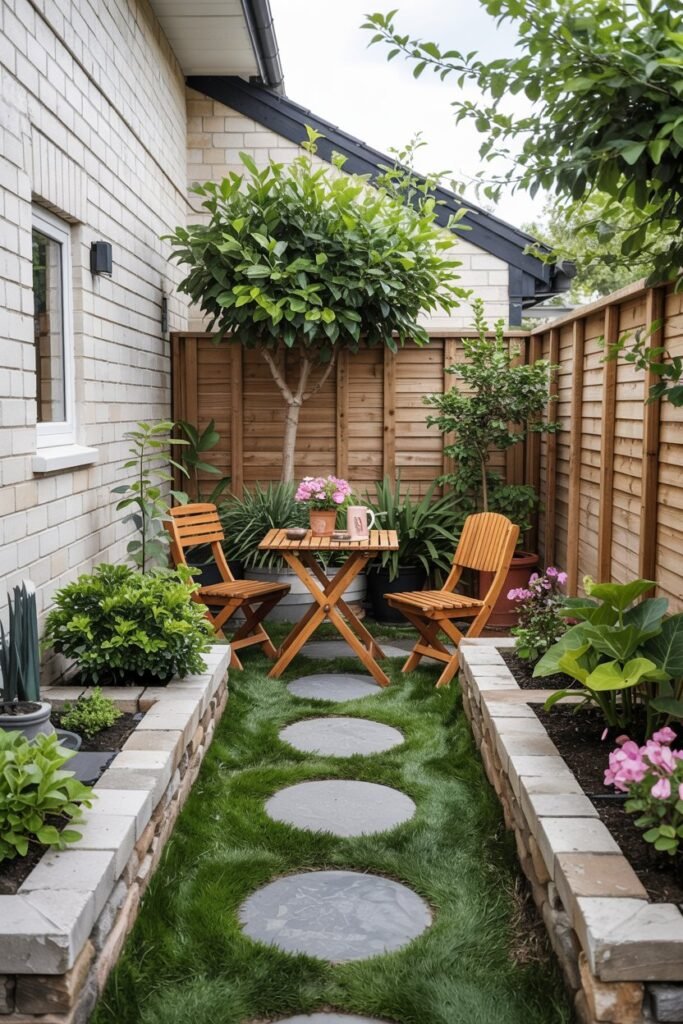
Think carefully about how you’ll use different areas of your garden. Look at where the sun hits throughout the day and consider which spaces would work best for various activities.
For example, you might designate one sunny spot for morning coffee, another shaded area for the kids to play, and a peaceful corner for evening relaxation. When each zone has a clear purpose, your garden becomes more functional and inviting.
4. Use Partial Screens to Define Spaces
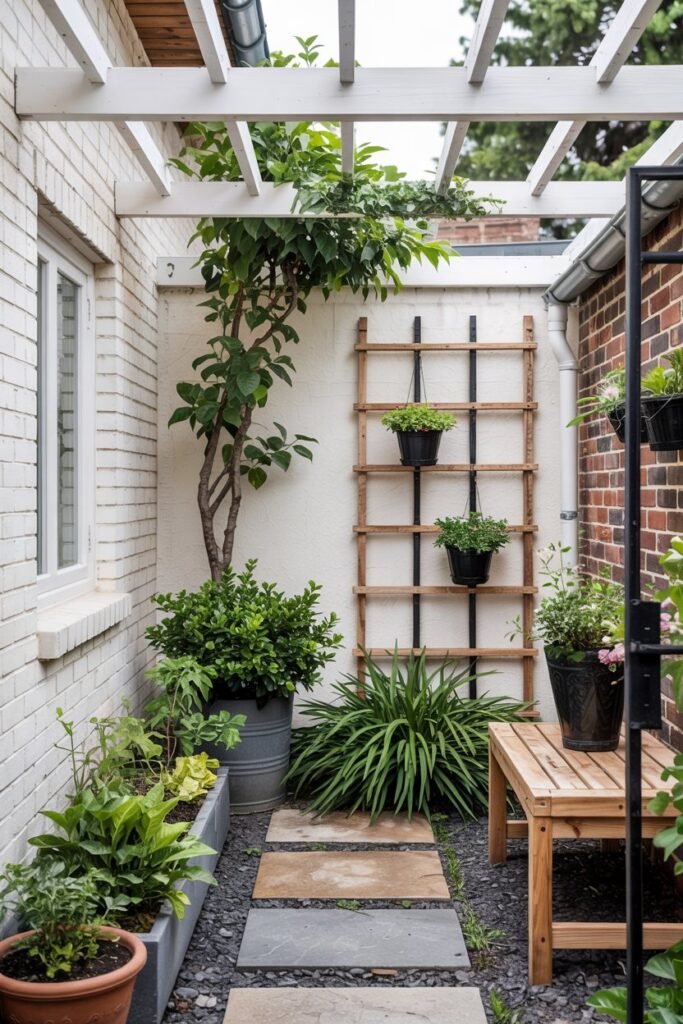
You don’t need solid walls to create separate zones. In fact, blocking off areas completely will make your garden feel smaller and more cramped.
I recommend using partial screens—sections of trellis, tall grasses, or strategically placed plants—to define spaces while maintaining views through the garden. This approach gives you privacy and definition without sacrificing openness.
5. Make the Far End Low-Maintenance

Let’s be honest: the bottom of your garden is less likely to get daily attention. Rather than fighting this reality, I suggest embracing it by making that area as low-maintenance as possible.
Use evergreen shrubs and paving rather than flowers and lawn that need regular care. Alternatively, consider adding a shed for storage or even a garden room that serves as an office, studio, or gym. This gives you a reason to visit the far end of your garden regularly.
6. Balance Privacy with Sunlight

The more you block out neighbors and the outside world, the more you’ll also block out sunlight. Finding the right balance is crucial, especially in narrow gardens that may already struggle with shade.
I always remind clients that tall shrubs around an area will bring seclusion but can create permanent shade. Consider your priorities and plan accordingly.
7. Upgrade Your Fences Thoughtfully
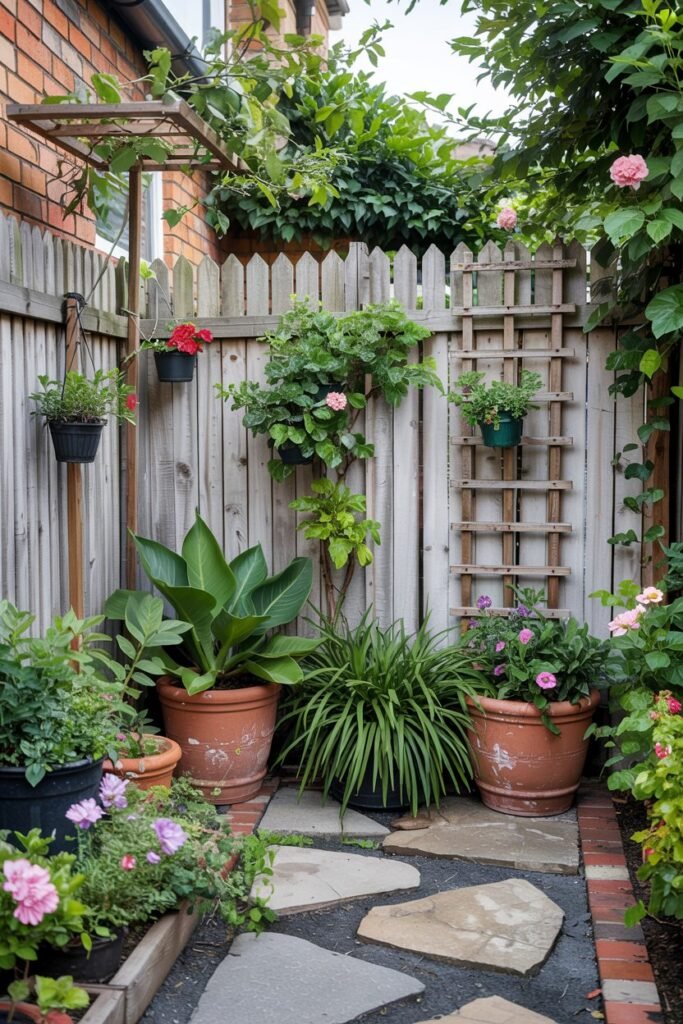
In narrow gardens, fences are quite prominent, so they deserve attention. One simple way to elevate them is by adding trellis panels at regular intervals along the fence line.
Here’s a tip many people miss: avoid painting fences in dark colors. Narrow gardens often have shade issues, and dark fences will absorb light rather than reflect it. Lighter colors can actually help brighten your space.
8. Choose Scented Plants Over Thorny Ones
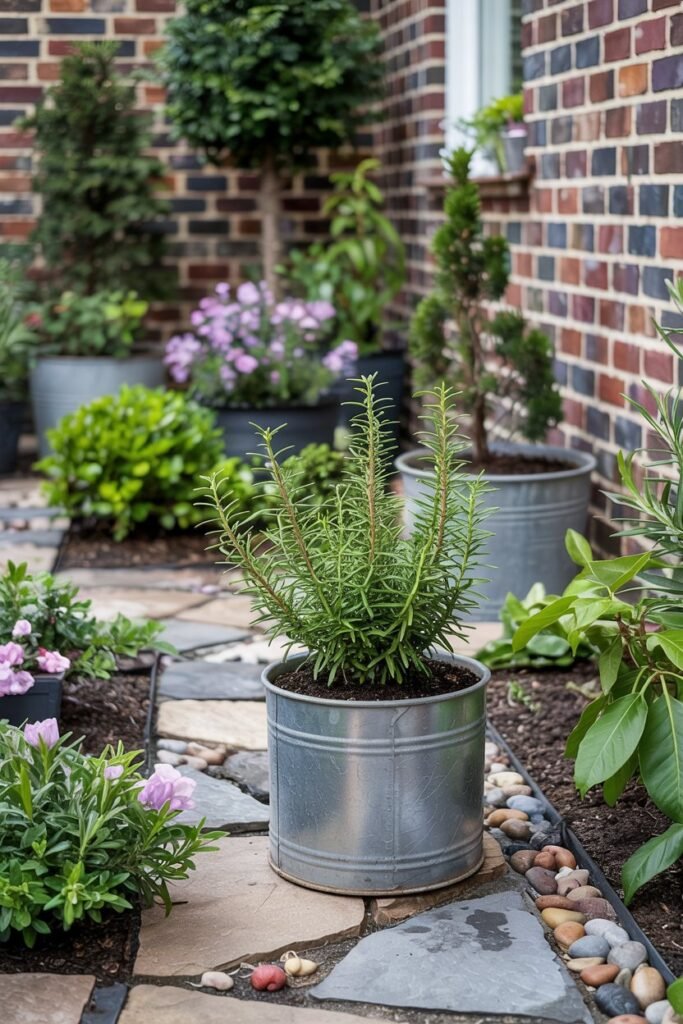
In the confined space of a narrow garden, you’ll be brushing past plants regularly. Thorny or sharp-edged plants become a continuing annoyance.
I love using scented plants instead. Rosemary releases a beautiful aroma when you brush against it. For seasonal interest, try daphnes in spring, honeysuckle in summer, and Christmas box (Sarcococca) in winter.
9. Put High-Maintenance Plants Near the House
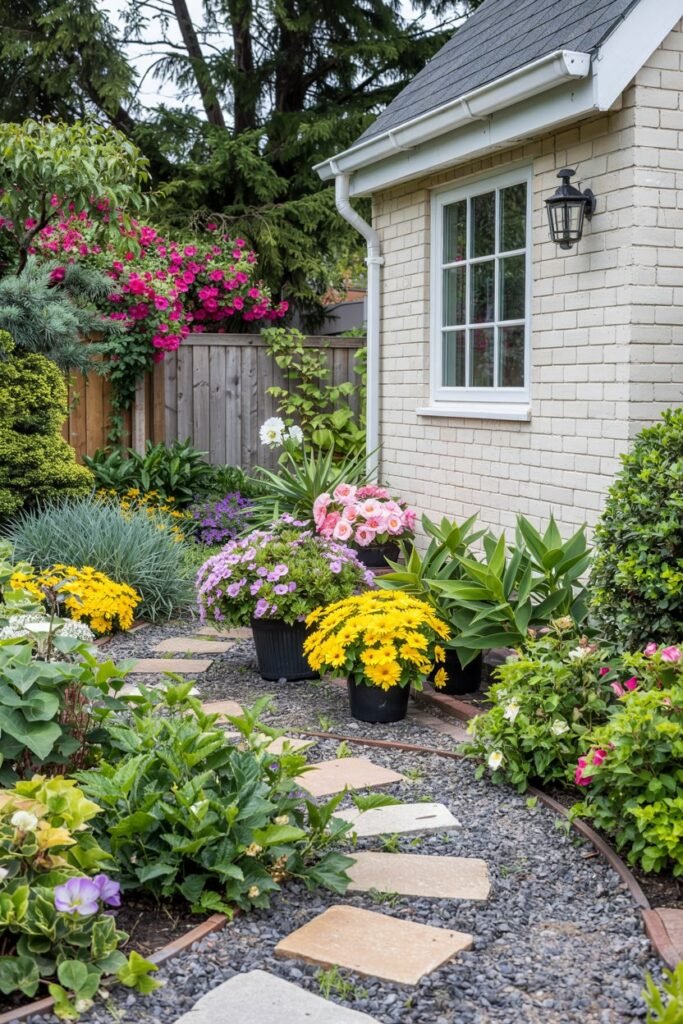
It’s easy to forget about areas that are out of reach in long gardens. I always advise clients to put flowers and perennials near the house where they’ll see them daily.
Save the low-maintenance shrubs for areas further away, or use shrubs throughout and focus your flowering displays in containers near high-traffic areas. This strategy ensures you actually maintain the plants that need regular attention.
10. Add Edging for a Polished Look

Neatness makes a huge difference in narrow spaces. Adding edging around flower beds will instantly lift your garden’s appearance.
Most DIY stores sell affordable edging materials, and this is definitely a weekend project you can tackle yourself. The crisp lines create structure and make your garden look professionally designed.
11. Incorporate a Water Feature
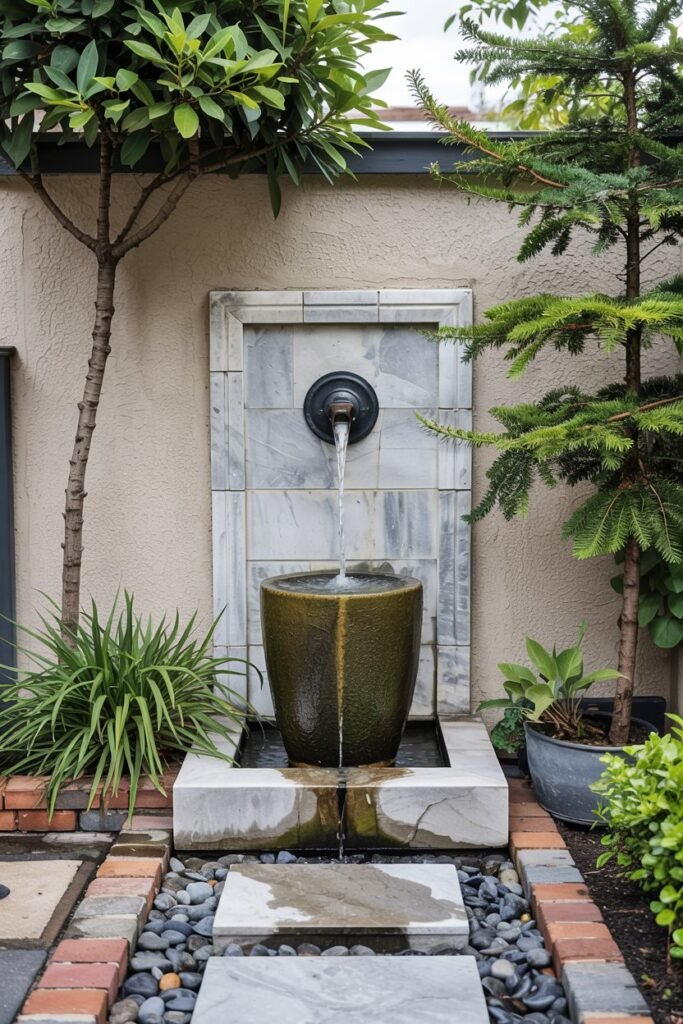
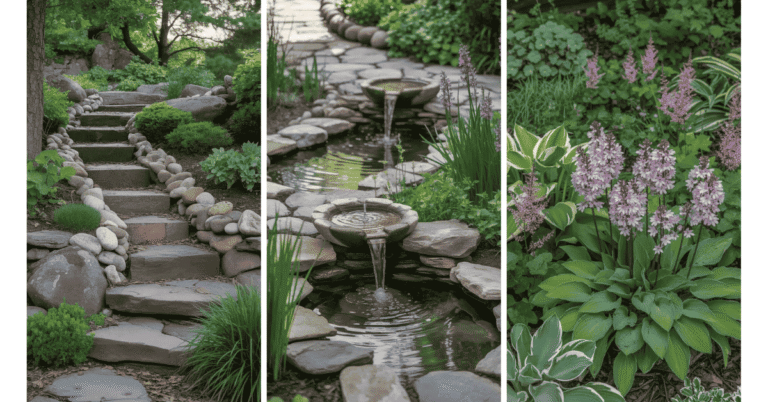
Sounds from neighboring properties can be intrusive in narrow gardens, but an inexpensive water feature will help mask and soften noise.
I find that the gentle sound of water creates a peaceful atmosphere and helps you feel more secluded, even in tight urban spaces. It’s a small investment that pays big dividends.
12. Use Hedging Plants for Green Boundaries
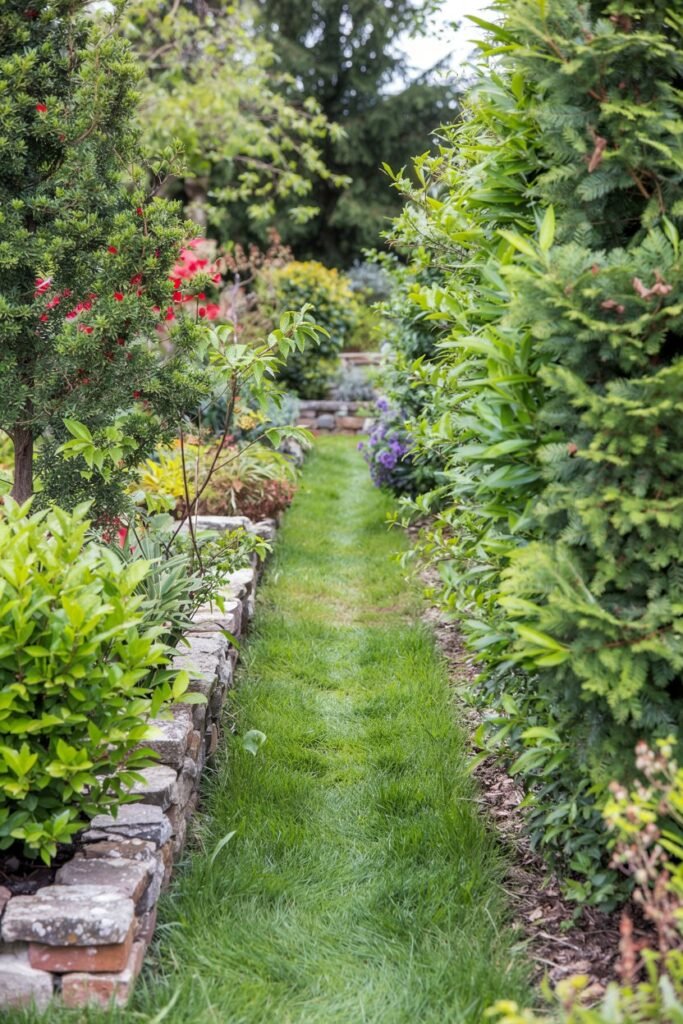
Hedging plants like yew, hornbeam, laurel, and beech are ideal for narrow gardens. They take up minimal room while providing height and a strong green background.
If you want year-round greenery, I recommend yew or laurel. For deciduous options that don’t mind losing leaves in winter, try hornbeam or beech. These create formal, structured boundaries without eating into your precious width.
13. Plant Tall, Airy Perennials as Soft Dividers

For a less structured look between zones, I love using tall, lacy plants like Verbena bonariensis or Thalictrum delavayi, which can grow nearly six feet tall.
Tall grasses like Molinia caerulea subsp. arundinacea ‘Windspiel’ create a stronger yet still informal barrier. These plants let light and air through while providing definition between spaces.
14. Consider Bamboo for Evergreen Screens
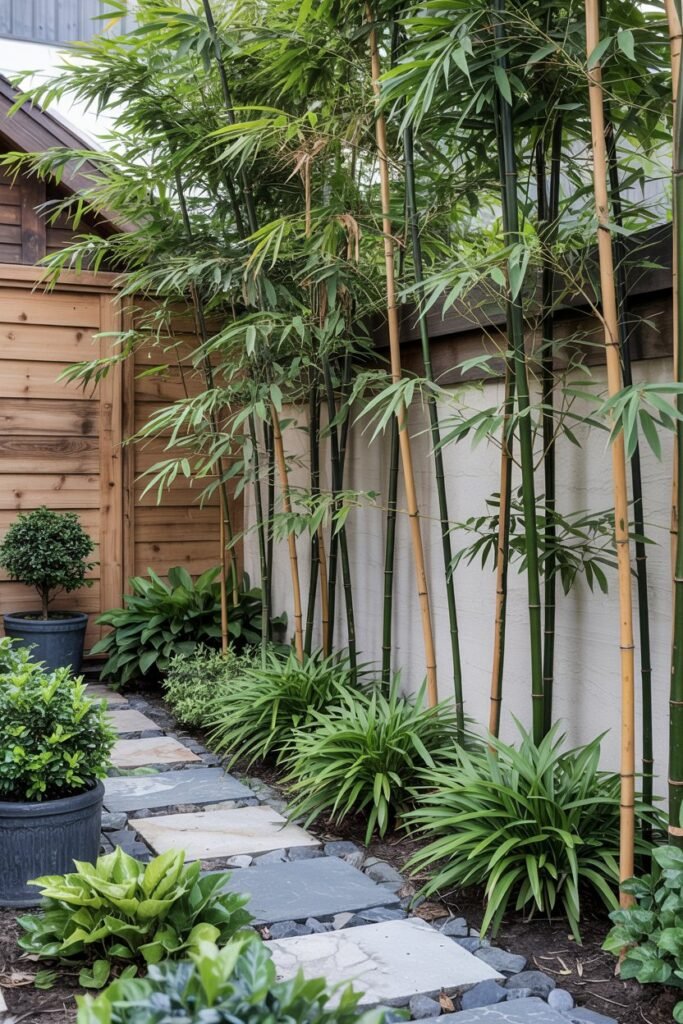
For a permanent evergreen wall of plants, bamboo works beautifully. However, you must choose non-invasive varieties that won’t spread aggressively.
I recommend black bamboo (Phyllostachys nigra) for narrow gardens. It provides height, movement, and year-round interest without taking over your space.
15. Place Seating Strategically
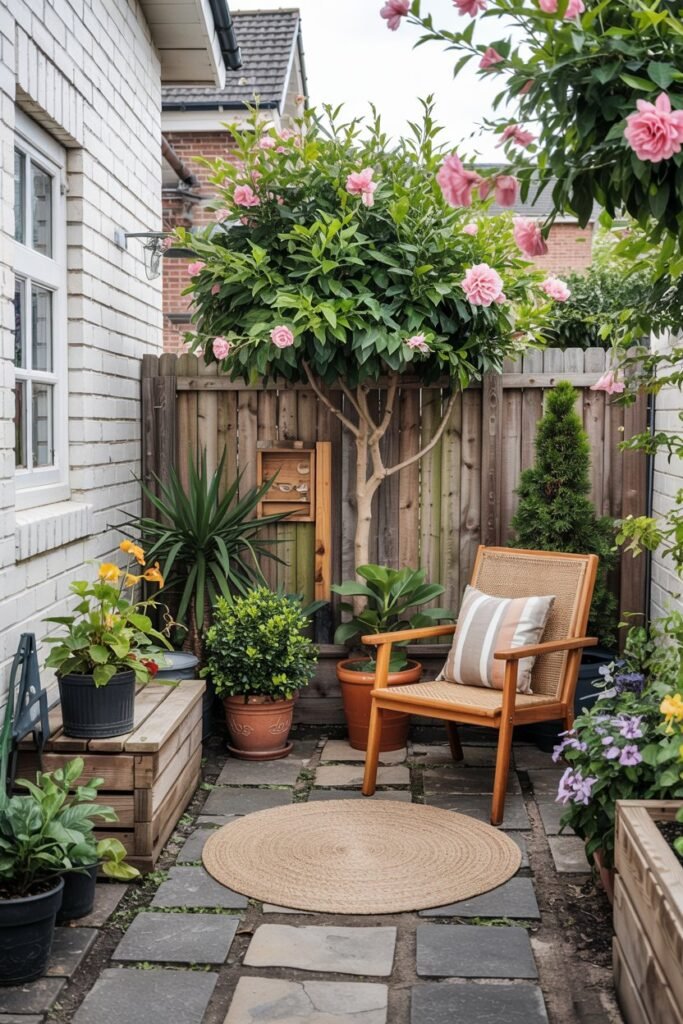
Avoid lining seats along the sides of your garden—this creates that dreaded waiting room effect. A seat plonked alongside a fence will look uncomfortable and uninviting.
Instead, I suggest creating proper seating areas within your zones, perhaps with a small patio or deck that feels like an intentional gathering space. Position seating to take advantage of sun, views, or privacy.
16. Use Mirrors to Create Depth
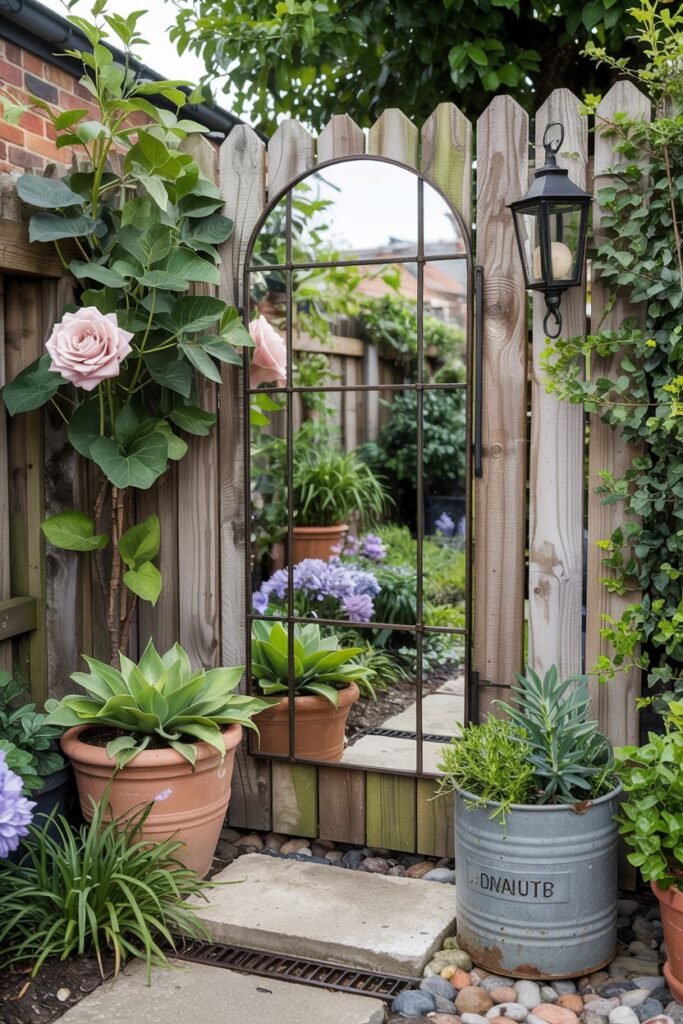
While this wasn’t in my original research, outdoor mirrors are a game-changer for narrow gardens. An antiqued mirror on a fence can create the illusion of depth and make your space feel larger.
Position mirrors to reflect the most attractive parts of your garden, and make sure they’re securely mounted to withstand outdoor conditions.
Conclusion
Long, narrow gardens come with unique challenges, but they also offer tremendous potential. By implementing these ideas—from creating distinct zones to choosing the right plants—you can transform your corridor-like space into a beautiful outdoor retreat.
The key is working with your garden’s shape rather than against it. Focus on creating interesting spaces, maintaining good proportions, and choosing plants that serve both functional and aesthetic purposes.
Ready to get started? Pick one or two ideas from this list and begin your transformation today. Your narrow garden is about to become your favorite outdoor space.